



Playa el Moro in Fuerteventura is a surfer’s paradise!
12 June 2025
Kitesurfing for kids: why even the youngest can try the sport
12 June 2025
In this article we talk about…
- Before entering the water, it is essential to assess the marine conditions, including tides, winds and currents, to safely surf and kitesurf.
- It is essential to acquire correct technique through good training. Surfing and kitesurfing schools offer detailed instruction on maneuvers, safety and equipment. Learning how to handle waves safely, knowing maneuvers such as the duck dive, and keeping equipment in good condition help prevent injuries. Regular training to improve muscle strength, coordination and endurance is essential to prevent injuries and improve performance.
- Complying with local and international regulations, understanding personal responsibility and emergency management are crucial aspects of safe surfing and kitesurfing.
Surfing and kitesurfing require a deep knowledge of the sea and a good technique to avoid injuries and accidents.
Assessing the sea conditions before entering the water, knowing how to handle the waves, carefully observing the environment, knowing the technique, training constantly: this is what you need to do to avoid injuries in surfing and kitesurfing.
To safely practice these demanding sports, you must be aware of your own abilities and not try to catch waves you can’t handle, without forgetting the importance of proper equipment and good physical shape.
Let’s go deeper into this topic and discover some useful tips and tricks to avoid injuries during surfing and kitesurfing sessions.
Read also: Playa el moro in Fuerteventura is a surfer’s paradise!
Surfing: how to surf safely
Surfing requires technique and respect for the waves.
The correct technique is learned from the experts, who teach in stages the ABC of surfing (take-off, paddling to the formation, duck-diving, etc.). Mastering these basics requires effort, so in our surf courses in Fuerteventura we take special care to teach them.
Equally important is to know the tides, winds (onshore/offshore) and currents. Using specific applications and listening to the advice of instructors will help the beginner, but also those who already have some experience, to choose the best time to surf and to identify the safest spots.
Another aspect that should not be overlooked is wave management: learning how to do it safely, such as keeping the board under control during a breaking wave or performing maneuvers such as the duck dive, reduces the risk of accidents and injuries.
Injury prevention is also related to equipment. Surfboards can be dangerous, especially fins, which are sharp. Wearing an appropriate wetsuit or swimsuit can help protect against cuts and abrasions. In addition, the condition of the equipment should be checked regularly.
Finally, physical preparation plays a fundamental role in injury prevention, as we will discover in the section dedicated to it.
Kitesurfing: some tips to practice it safely
Kitesurfing safely requires a thorough knowledge of several aspects.
First of all, knowing how to use the control bar correctly is fundamental to control the kite and avoid accidents. The control bar is connected to several lines that affect the power and handling of the kite; some kites are equipped with a fifth line that facilitates the relaunch of the kite from the water and is an additional safety system.
Taking lessons with competent instructors who can guide students around the boarding spots, as is the case at our kitesurfing school in Fuerteventura, can help to avoid awkward or even dangerous maneuvers. Qualified instructors are able to give clear instructions on the key aspects of maneuvers, the use of helmets, life jackets and ultimately the technique of “self-rescue”.
Choosing the right kite size, depending on wind conditions and your own experience, should not be underestimated. Before the session, it is important to check the functioning of the safety systems,
There are also specific safety rules: for example, never go kiting (or even surfing) alone and never ignore local regulations.
Finally, as in surfing, it is good to keep an eye on the weather forecast and, if possible, use an anemometer to measure wind speed, taking care to avoid offshore and onshore wind conditions if you are not experienced enough.
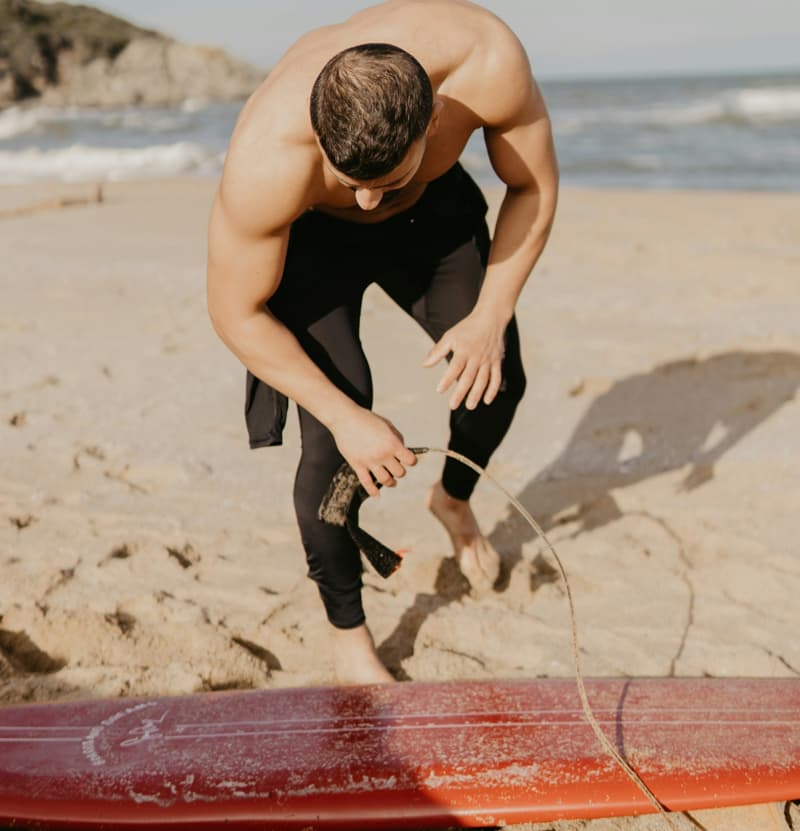
How much does training count to avoid injury?
It matters a lot! For kitesurfing and surfing, training daily not only improves performance, but also reduces the risk of injury.
Training should aim to tone the body, especially the arms and abdomen, and improve coordination. Aerobic sports, such as swimming, running or cycling, improve fitness and “breathing”, while specific exercises can improve flexibility and muscle strength, as well as contributing to the development of “muscle memory”. In this regard, balance boards and surf skates are useful tools for training balance and surfing technique even out of the water.
Interval training increases endurance and explosiveness, which are essential for a good take-off. The abdominals, being stabilizing muscles, are especially important for surfing and should be included in all training programs.
However, you should not train to exhaustion: set realistic goals and monitor your progress, both in terms of athletic performance and general well-being, is what trainers recommend. This is complemented by a balanced diet and adequate rest.
In order to know how to train correctly, using a personal trainer or a trained instructor can make all the difference.
Kitesurfing and surfing safety: pay attention to the regulations!
Knowledge of local and international regulations, as well as an understanding of personal responsibility and respect for other practitioners, is as important as training, technique and equipment.
In the case of kitesurfing, for example, a specific civil liability regime applies, which may vary according to the nature of the sport, contractual or non-contractual. In Italy, for sports considered extreme, such as kitesurfing and surfing, article 2050 of the Italian Civil Code, which deals with dangerous activities, applies.
In addition, emergency management and first aid are fundamental aspects. Practitioners must be trained to handle emergency situations, both for their own safety and for the safety of others.
This is why trusting a serious school is not a secondary concern: the responsibility of the instructor and the sports association also concerns the safety of the students, especially when it comes to minors.
Read also: How to prepare your first surf course
In conclusion
Both surfing and kitesurfing are exciting sports, but they also require special attention to safety, training and also personal and legal responsibility. Assessing the sea conditions, choosing the right equipment and knowing the technique: this is what we must do to avoid the risk of injury, without forgetting the importance of physical training, mental preparation and nutrition.
Finally, knowledge of legal aspects and personal responsibility is crucial to practice these sports safely and with respect for others.
If you want to practice kitesurfing and surfing in a safe way, learning to respect the sea and to use the right techniques, take a look at the courses on our website: our qualified and experienced instructors are waiting for you!
Injury prevention in surfing and kitesurfing: FAQ
What are the essentials for safe surfing and kitesurfing?
It is essential to evaluate sea conditions, such as tides, winds and currents, before entering the water. In addition, it is important to have correct technique and good physical training. Surfing and kitesurfing schools offer detailed instruction on maneuvers, equipment and safety. Knowing basic maneuvers, such as the duck dive in surfing, and learning how to handle the waves and the kite in kitesurfing are fundamental to avoid injuries and accidents.
Why is physical training important in water sports such as surfing and kitesurfing?
Physical training helps to improve performance and reduce the risk of injury in sports such as surfing and kitesurfing. It is recommended to train arm and abdominal muscles, work on coordination and endurance through aerobic sports, and practice specific exercises for flexibility and strength. Balance boards and interval training are useful tools for developing technique and stability out of the water.
What is the importance of knowing the rules and personal responsibility in surfing and kitesurfing?
Knowing local and international regulations and personal responsibility is crucial in the practice of surfing and kitesurfing. There are liability and first aid rules that must be followed to ensure the safety of yourself and others. In countries such as Italy, kitesurfing and surfing are regulated by article 2050 of the Civil Code for dangerous activities. Serious schools also offer training in emergency management, which is essential to practice safely.